
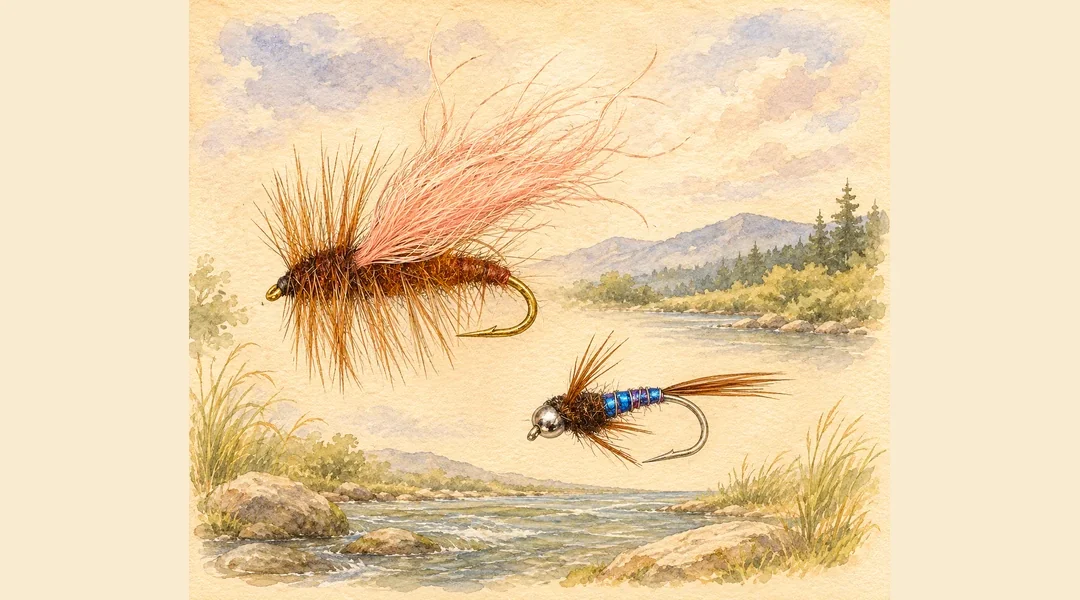
North Santiam River Trout Flies
Author: Mike Oser
These are the trout flies I carry on the North Santiam River, with the colors, hook sizes and rod setups I use when I float the river.
Dry Flies
- Parachute Adams — sizes 14 and 16
- Yellow Parachute Sulphur — sizes 14 and 16
- Parachute Blue-Winged Olive — sizes 16 and 18
- Tan CDC Elk Hair Caddis — sizes 14 and 16
Foam Flies
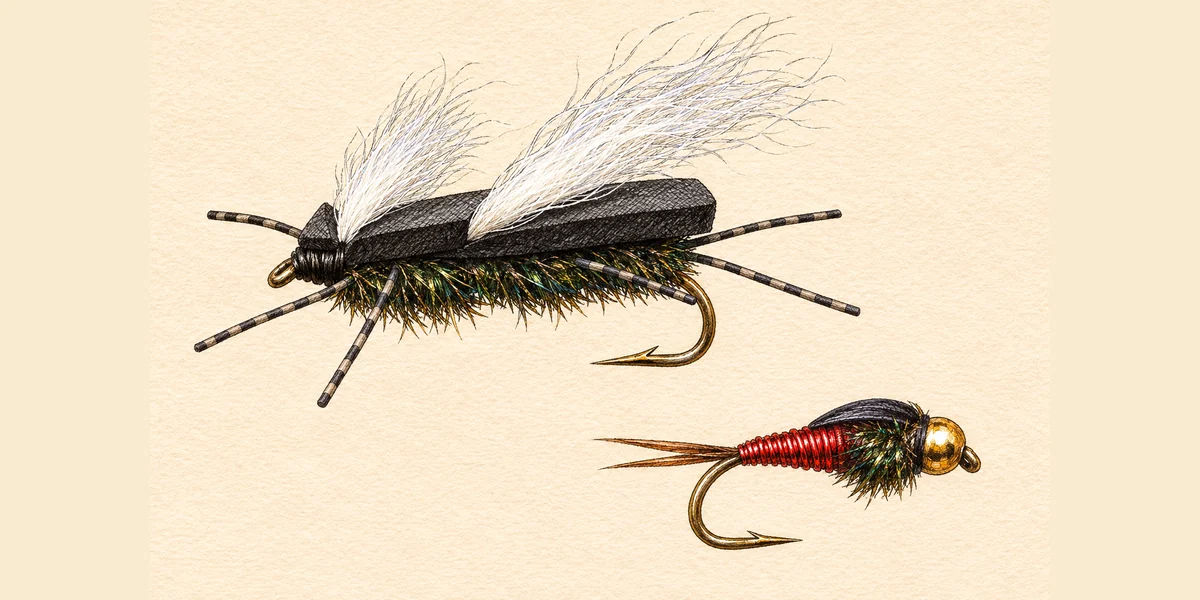
- Black-and-peacock Chubby — sizes 10 and 12
- Chubby Norm — sizes 10 and 12
- Black Neversink Caddis — size 12
- Olive and black Mini Chubby — size 14
My dry-dropper setup. I fish a 9-foot 5-weight rod with a floating line and an 8-foot tapered leader tied to a size 12 black-and-peacock Chubby. Off the dry, I tie 4 feet of 7-pound fluorocarbon to a size 14 red Copper John.
Wet Flies
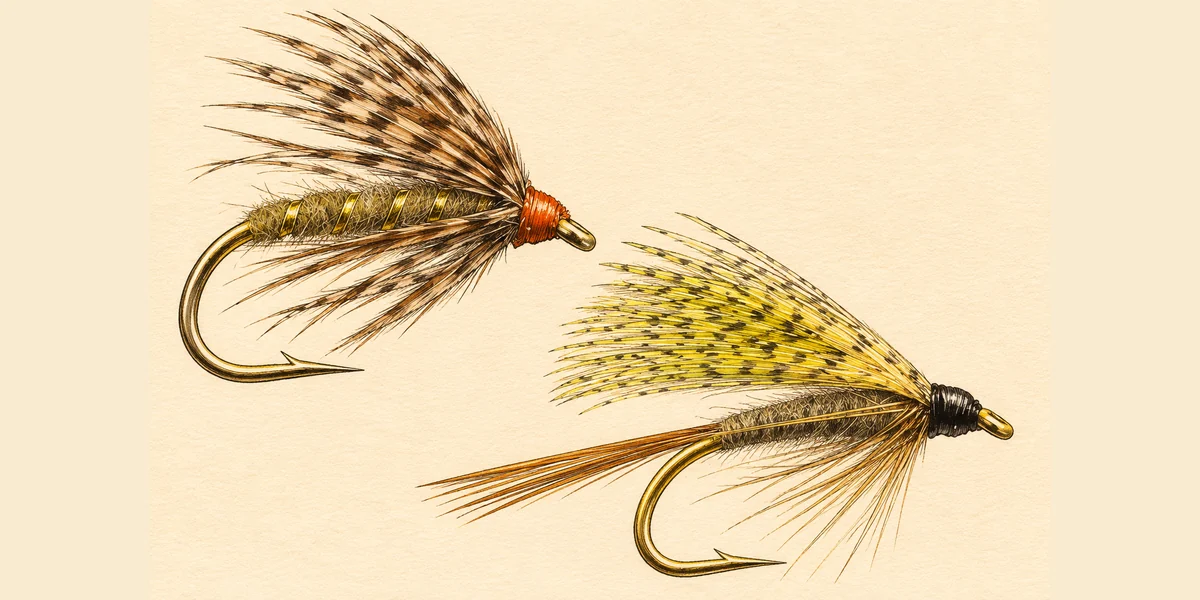
- March Brown Spider — sizes 12 and 14
- Soft Hackle Brassie — sizes 12 and 14
- Dark Cahill Wet and Light Cahill Wet — sizes 14 and 16
My wet-fly setup. I fish an 11-foot 6-inch 3-weight trout Spey rod with a 240-grain Scientific Anglers Scandi Lite integrated line. I use a 10-foot tip, either a Sink 3 or a floating tip. From the tip, I run 7 feet of tapered mono to a size 14 March Brown Spider.
Streamers
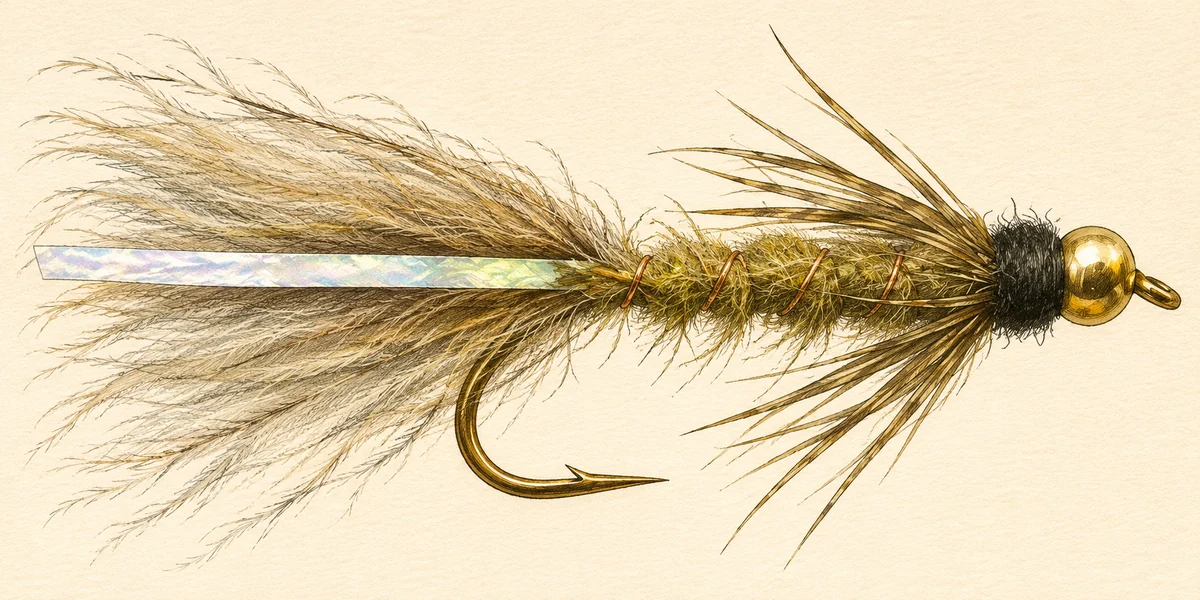
- Natural Possie Bugger — sizes 8 and 10
- Natural Sculpzilla — size 8
- Woolly Bugger in olive and black — size 8
- Conehead Muddler Minnow — sizes 8, 10 and 12
My streamer setup. I fish a 12-foot 3/4-weight trout Spey rod with a 270-grain Scientific Anglers Skagit Lite integrated line. I use a 10-foot T-8 sink tip, then 6 feet of 7-pound fluorocarbon leader tied to a size 8
Nymphs
- TNT Caddis — size 14
- Possie Bugger — size 14
- Copper John in purple, red or copper — sizes 14 and 16
- B’s Black Stonefly — size 14
- Natural Hare’s Ear — size 14
Euro Nymphs
- Tungsten Blowtorch — size 14
- Tungsten Sexy Walt’s, natural — sizes 12 and 14
- Tungsten Frenchie — size 14
- Tungsten Pat’s Rubber Legs in black or brown — sizes 8 and 10
Top Tips Fly Fishing the North Santiam River
1. Fish the dry-fly water even when you don’t see trout rising
You won’t see many trout rising to dry flies on the North Santiam River. If you wait to see a fish come up before you tie on a dry, you’ll pass a lot of good water. When I see a quality riffle or run, I tie on a size 14 or 16 Parachute Adams and fish it.
2. Park the raft and walk and wade
When the water looks good, park your raft or drift boat and get out. From the bank, you can look over the whole run and decide where to make your first cast.
Start short on every run. Fish the shallow riffle along your own bank before you step into it. It’s easy to kick a big trout out of a foot of water while you’re looking halfway across the river. Once you’ve covered the water close to you, work your way out.
3. Take two rods and fish the run twice
When I get out of my raft, I take a trout Spey rod and my 9-foot 5-weight. I swing the run first. In deeper water, I like the size 8 natural Possie Bugger on my Skagit setup. Over shallow ledges, I like the March Brown Spider on my Scandi setup.
Then I walk back to the head of the run, pick up the 5-weight and cover the same water with my dry-dropper rig. I like a lighter beadhead under the Chubby and tungsten when I’m Euro nymphing. Any of the five patterns in my nymph list can be tied with a tungsten bead when I want more depth.
4. What are ledges on the North Santiam, and how do I fish them?
You’ll see places where the water is about a foot deep across the top of a rock ledge, then drops into two to four feet of green water. Trout sit in those green “buckets” and feed. They’re looking up. The trick is getting your fly across the shallow rock without hanging up before it reaches them.
A heavy tungsten nymph can catch on top of the ledge and pull the dry to a stop. Here I change my dry-dropper rig. I tie a size 12 or 14 March Brown Spider 12 to 16 inches behind a Micro Chubby. That short piece of tippet keeps the wet fly just under the surface as it comes off the ledge. A trout can rise out of the green water and take the Spider without touching the foam fly.
The March Brown Spider is my number-one trout fly on the North Santiam. I’ll also swing the size 14 on my Scandi rod with a floating tip or a Sink 3. I want the wet fly to clear the shallow rock and keep swinging over the trout.
5. Look for water the boats are passing
Watch where the boats go on your next float. A side channel is a good place to start looking. If the boats are following the main channel, park your raft and walk the side channel. Look for a riffle you can cover from the bank. That’s water you may never get a good look at from the oars.
Book Your North Santiam River Shuttle
Pick your put-in and take-out, and we’ll move your rig while you fish. Book your North Santiam River shuttle.